Album
This Long Broken Road
Three voices, one journey — Brian Kittrell · Dawson McCoy · Sadie McCoy — September 3, 2025
Brian Kittrell — Listen on Apple Music
Background & Production
This Long Broken Road was conceived, written, and performed by Brian Kittrell. The album brings together his original lyrics, melodies, vocal performances, and creative direction into a single body of work shaped by survival, heartbreak, reflection, and resilience. The record was not written in one sitting; fragments and ideas for many of these songs had been sketched across nearly three decades before being shaped into a unified album. That long gestation gave the project both a lived-in authenticity and a layered perspective, tying together youthful longing, adult struggle, and hard-earned reflection. The production was deliberately stripped-down, leaning into a dark country and Americana aesthetic rather than glossy Nashville polish. The sonic palette is centered on 12-string acoustic guitars, heartbeat-like percussion, sparse piano textures, and raw vocal performances that range from fragile to defiant. Each arrangement was built to breathe, leaving space for imperfection, silence, and grit — making the songs feel lived rather than manufactured. In keeping with the album's themes of survival, heartbreak, and resilience, the vocal delivery emphasizes emotional immediacy over technical precision. The result is an unpolished, cinematic soundscape that mirrors the lyrical terrain of broken highways, shuttered diners, and inner battles. This Long Broken Road stands as one of Brian Kittrell's most personal releases, shaped by years of unfinished ideas, lived experience, and a desire to turn long-carried fragments into a complete musical statement.
Composition & Themes
The song fragments of this album were written over a period of nearly 30 years, and only recently, they were compiled into a full-length album of deep reflection on hardship, endurance, and resilience—themes that run through every track. The title song, "This Long Broken Road," sets the tone: a weary traveler pushing forward despite exhaustion, looking for meaning in the endless miles ahead. It frames the album as both a literal and metaphorical journey through life's struggles. "Borrowed Time" reinforces that sense of grind, describing overwork, sacrifice, and the crushing weight of obligations that never seem to ease. Together, these two tracks embody survival and perseverance. On a more personal and intimate scale, "Cut Me a Little Deeper" explores betrayal and broken trust, while "Reason Why" captures the anguish of sudden loss — a desperate plea to hold on when it's already too late. Its "twin," "Let Go," offers the perspective from the other side: a farewell in a "voice from the grave" style from someone who cannot stay, urging their loved one to carry on. Heard together, the two songs reflect the devastating duality of grief and acceptance. "War Inside" turns inward, showing that no matter how successful or composed a person may appear, unseen battles with self-doubt and despair can be all-consuming — and dangerous if left unspoken. Other songs tackle the choices and consequences that define life's crossroads. "Do or Die" is an urgent reminder that time is short and decisions carry weight, while "All It Takes" critiques the shallow hookup culture of modern nightlife, showing how fleeting pleasures often lead to emptiness. Leaving toxic cycles behind is another recurring thread. "No Place Like Gone" deals with walking away from promises that never change, embracing painful freedom rather than staying stuck in deceit. Finally, "Paid in Full" closes the album with reflection: every joy is sharper because of past sorrow, every love more valuable for the losses that came before. Its stripped-down arrangement captures both fragility and transcendence, hoping to leave the listener with a sense of completion. Through these ten songs, Brian Kittrell delivers a cohesive body of work that is intentionally raw, unpolished, and cinematic. Each track contributes to a broader portrait of struggle, survival, and the price of carrying one's burdens down life's long, broken road. Musically, the album mirrors its lyrical arc: arrangements begin spare and intimate, often building into full, anthemic climaxes.
Pick an Edition
This Long Broken Road is released as three distinct performer editions, each with its own real, independently-verified track lengths — durations differ by performance, not just persona.
This Long Broken Road
Brian Kittrell's own performances — the first, unfiltered interpretation of This Long Broken Road, released as the source blueprint that Dawson McCoy's and Sadie McCoy's editions are voiced from.
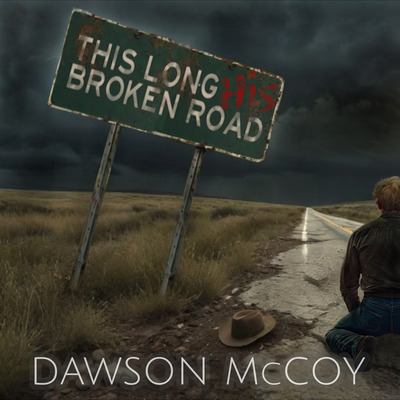
Dawson McCoyThis Long Broken Road: His
This Long Broken Road: His presents the album through Dawson McCoy's voice, emphasizing the road-worn masculine perspective of the project. This edition frames the songs as a hard-traveled journey through heartbreak, endurance, regret, and survival.
Sadie McCoyThis Long Broken Road: Hers
This Long Broken Road: Hers reinterprets the album from Sadie McCoy's perspective, giving the same emotional landscape a counterpart voice. The edition highlights grief, longing, resilience, and the quiet strength found in carrying pain forward.
Track List
Same ten songs across every edition — pick an edition above to hear its specific performance, or open a song below for Brian Kittrell's original take (each song page cross-links to every other performer's version).
The Story Behind the Songs
This section offers a deeper look at select tracks from This Long Broken Road. Not every song appears here — some stories are simply too personal, too painful, or too private to share.
War Inside
This was a song I needed to write — but more importantly, I needed to produce it, because it has a chance to save lives. Depression isn't talked about enough, and my goal wasn't to say, 'Oh, you're gonna be all right. Everybody gets a little sad.' I wanted it to feel like I walked right up to someone in that hole, told them what was happening inside me, and let them know they weren't alone. Sometimes, when I was very deep in the darkest places, knowing that there were other people suffering alongside me gave me a glimmer of hope. Even though we were all hurting and doing our best to hide it from the world in isolation, it meant that we weren't completely alone. Those of us who suffer from depression all know that 'voice within that tells us the truth.' It's not the truth — but in those moments of deep despair and anguish, when we're alone in the dark with that voice, we'll believe anything it says and take it as the truth.
Reason Why (twin song with "Let Go")
This song carries the weight of fifteen years I spent as a 911 dispatcher. It's written from the perspective of an operator (me) who answered hundreds of calls that ended this way — with grief, loss, and silence on the other end of the line. Too often, both I and the caller were powerless to do anything more than wait for help to arrive. I didn't write Reason Why as a dramatization. I wrote it as a testimony — to capture the echoes of voices I still hear. It's my attempt to give shape to that helplessness, and in doing so, honor the countless people who've cried out for help in their final moments.
Let Go (twin song with "Reason Why")
The line 'To live in the hearts of others is to never die' is my own adaptation of the epitaph on my grandparents' tombstone: 'To live in the hearts of those we leave behind is not to die.' I never met my grandfather, Pete Walker, who drowned years before I was born, but I miss my grandmother, Alice Faye Walker, every single day. Let Go is dedicated to them. It's written as a 'voice from the grave,' a message of comfort from the ones who've gone before us. For me, it's a way of carrying their love forward. For others, I hope it serves as a reminder that the ones we've lost live on inside us, in memory and in heart.
Do or Die
I tried to go to college half a dozen times across my life, but it wasn't until 2021 that I finally made the leap to leave 911 dispatch behind and pursue computer science and technology. I started with zero credits, and in December 2025, I'll graduate with a master's degree in computer science. Do or Die came from staring down this long, broken road and deciding it wasn't too late. I could change my life. I could take a different path. And I could finally be happy. This song is my anthem of determination — for me, and for anyone else who needs to know that no matter how far gone you feel, there's still time to turn the wheel and blaze a new path for the better.
This Long Broken Road
"This Long Broken Road" turns the album's title into its central image: a stretch of highway with no visible end, walked by someone too exhausted to stop but too stubborn to quit. It's not about arriving anywhere -- it's about the act of continuing when continuing is the hardest thing left to do. The road stands in for a whole life's worth of hardship, compressed into one long, unbroken walk toward a horizon that keeps receding.
All It Takes
A song about the emptiness underneath a culture that treats connection as disposable. It follows a string of one-night stands and swiped-right encounters, watching how easily people trade something real for a few hours of distraction -- and how little it actually takes to throw away something that mattered. The refrain isn't judgment from the outside; it's a warning from someone who's watched the pattern repeat.
Cut Me a Little Deeper
Written from inside a marriage vow that got broken anyway -- "forsaking all others" turned out to be conditional. It's the sound of someone realizing the betrayal wasn't a single moment but a slow accumulation, and asking, bitterly, what they did to deserve it. The title phrase becomes almost sarcastic by the end -- an invitation dressed as an accusation.
No Place Like Gone
A breakup song built around leaving quietly instead of leaving loudly. There's no confrontation here, just a note on the counter and a decision that's already been made -- the relief of walking away from a promise that kept getting broken. "No place like gone" reframes leaving not as loss but as the first clean breath in a long time.
Borrowed Time
About the exhaustion of a life spent working for other people's benefit -- every hour handed over, none of it ever paid back. It's less about one job and more about the general condition of being needed by everyone and heard by no one. The closing image -- "if I was a train, I'd run clear off the track" -- is the sound of someone close to the edge of what they can carry.
Paid in Full
The album's closing argument, and its wisdom story: that pain isn't the opposite of a good life, it's what makes a good life legible. Every joy in the song is measured against a loss that came before it -- love feels bigger because of what it costs, and peace feels earned rather than given. It's less a resolution to everything that came before it on the record and more a way of making sense of it: the debt gets paid, eventually, in the form of having lived through it.
Prefer no vocals? Concertos on This Long Broken Road is a 10-track instrumental companion album covering the same songs.